Use Finder
Part 3A. Introduction
Div. 3A.1. Orientation
Sec. 3A.1.1. Relationship to Zone String
A zone string is composed of the following districts:

The Frontage District is a separate and independent component of each zone.
Sec. 3A.1.2. How to Use Article 3. (Frontage)
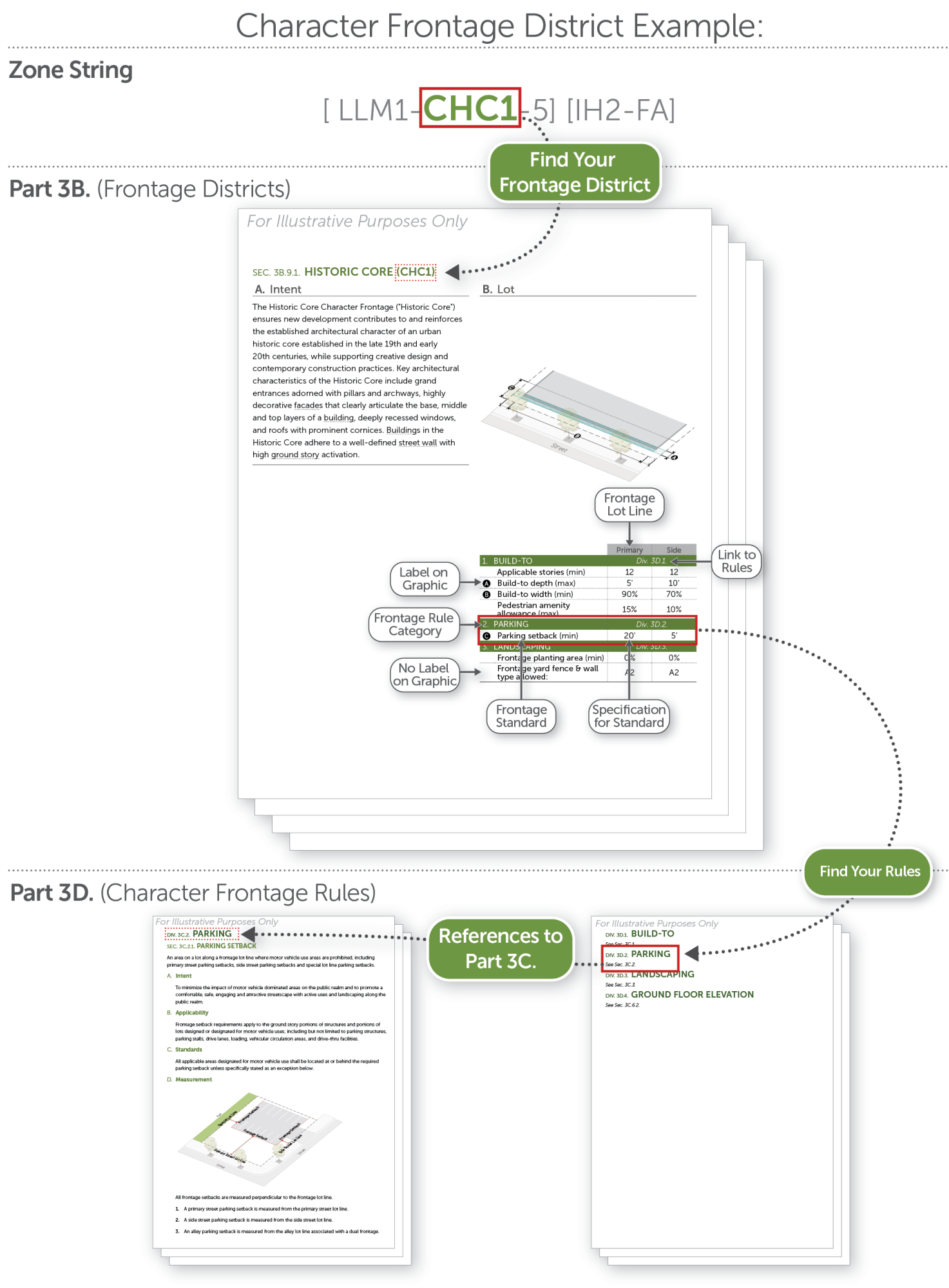
Identify the Applicable Frontage District
The second component in a zone string is the Frontage District applied to a property.
Determine Applicable Frontage District Standards
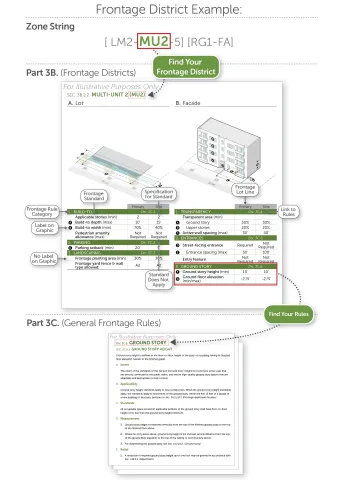
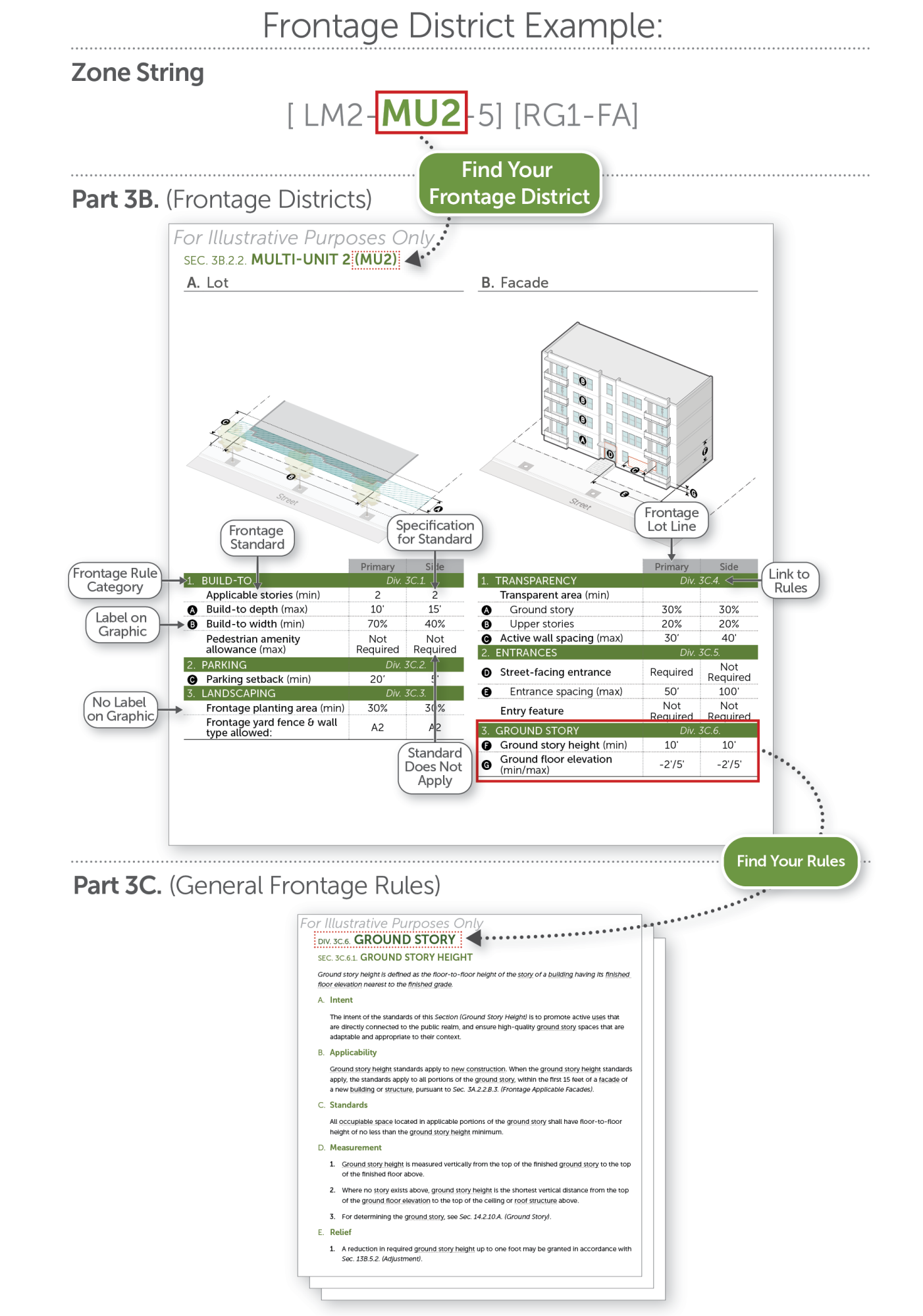
Frontage District standards are outlined in Part 3B. (Frontage Districts). Each Frontage District page identifies the standards specific to that Frontage District.
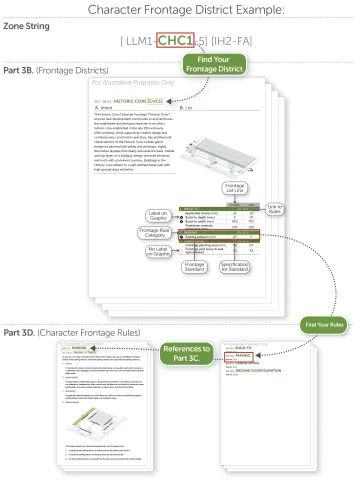
Each Frontage rule category on a Frontage District page in Part 3B. (Frontage Districts) provides a reference to Part 3C. (General Frontage Rules) or Part 3D. (Character Frontage Rules), where the standards within that rule category are explained in detail. Part 3D. (Character Frontage Rules) may reference Part 3C. (General Frontage Rules) for standards that are common to both Character Frontage Districts and general Frontage Districts. Text in italics below a heading provides a definition of that heading.
Sec. 3A.1.3. Frontage District Diagrams
General
Diagrams and illustrations are provided in this Article (Frontage) to assist users in understanding the purpose and requirements of the text and are not requirements but examples of compliance with a particular standard. In the event a conflict occurs between the text of this Article (Frontage) and any diagram or illustration, the text prevails.
Lot Diagrams
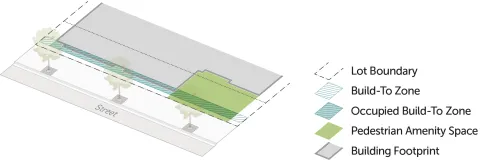
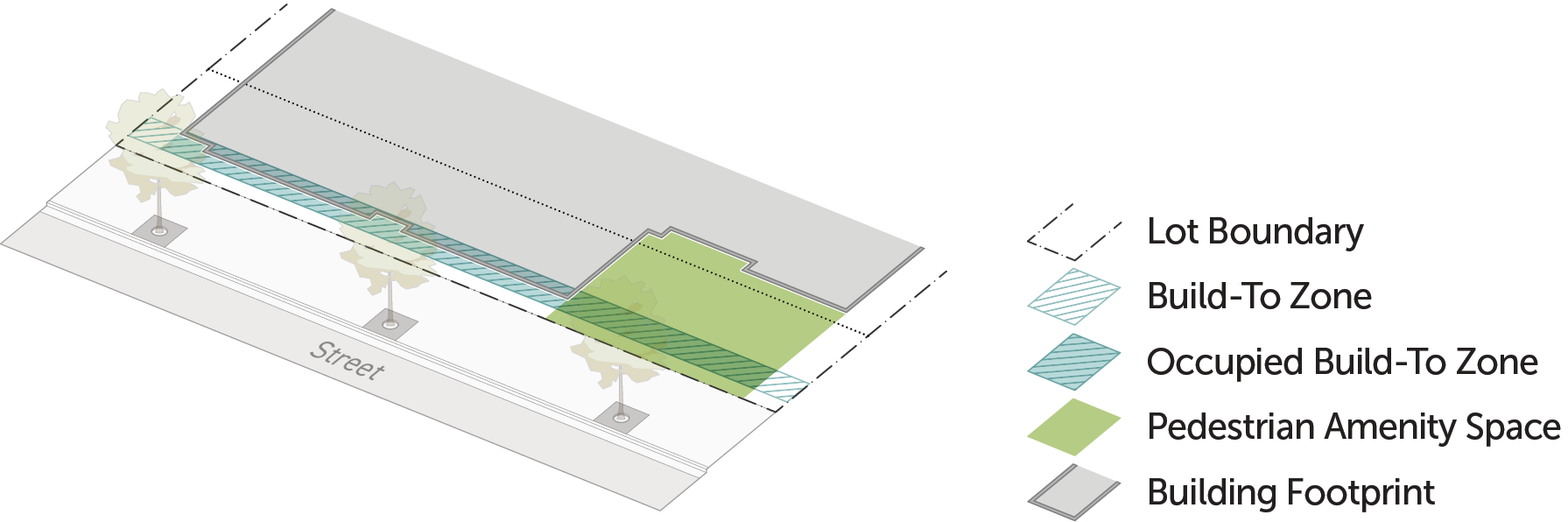
Lot Boundary
This line represents the perimeter of the subject lot, serving as a reference for build-to width.
Build-To Zone
This blue hatched shape represents the area on a lot, near the frontage lot line. Buildings are required to occupy the build-to zone according to the minimum build-to width specified by the applied Frontage District (Part 3B.).
Occupied Build-To Zone
The part of the build-to zone with a blue background representing the width of the build-to zone applied toward build-to width based on location of buildings or location of pedestrian amenity spaces.
Pedestrian Amenity Space
This green shape represents the largest pedestrian amenity space applicable toward the build-to width according to the maximum pedestrian amenity allowance specified by the applied Frontage District (Part 3B.).
Building Footprint
This shape represents the building footprint for the front portion of a lot including the portion of a building occupying the build-to zone, and serves as a reference for build-to width that meets the build-to standards of the applied Frontage District (Part 3B.).
Facade Diagrams
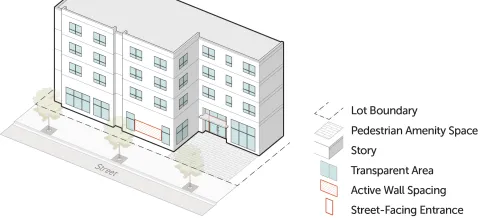
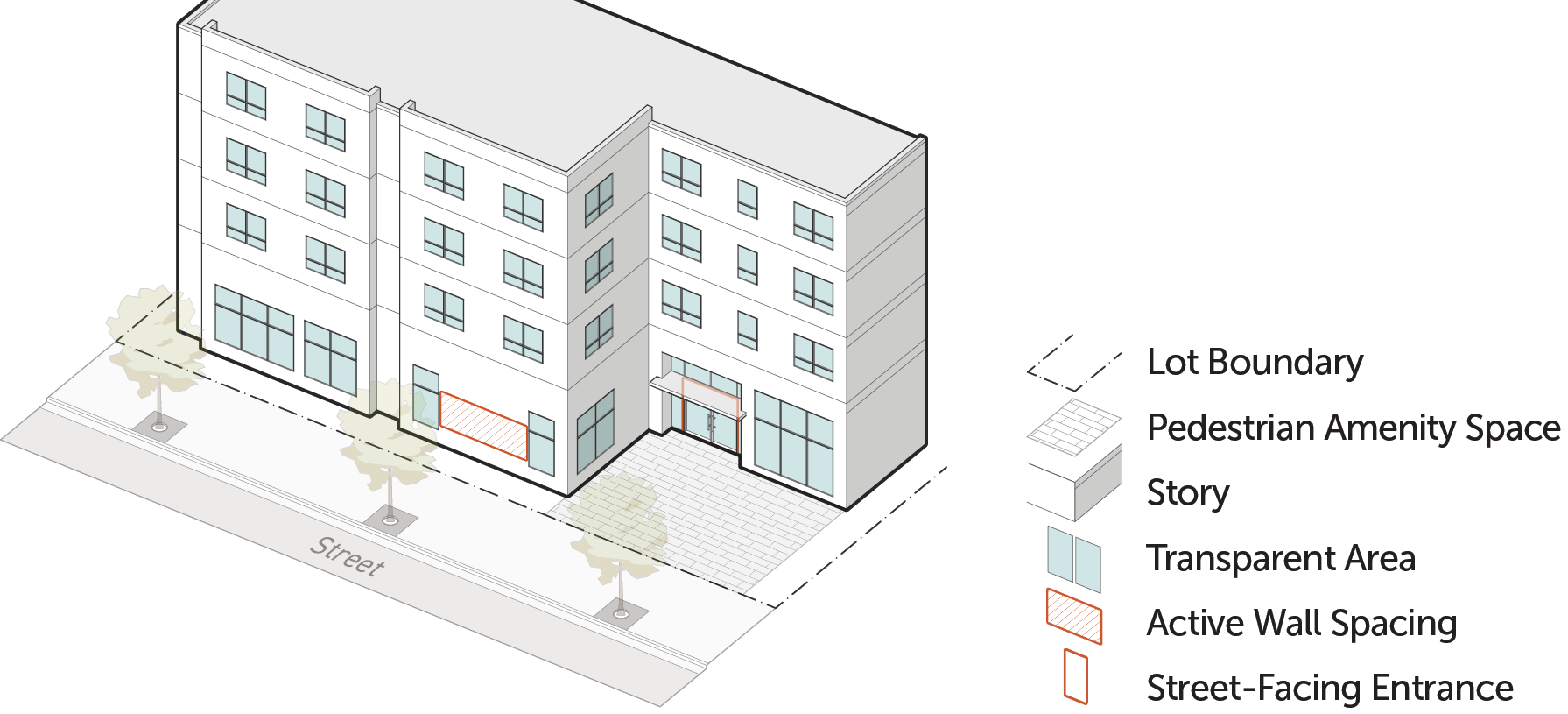
Lot Boundary
This line represents the perimeter of the subject lot, serving as a reference for build-to width.
Pedestrian Amenity Space
This paver-patterned shape represents the pedestrian amenity space shown in the corresponding lot diagram, demonstrating the relationship between pedestrian amenity space requirements, and the standards of the applied Frontage District (Part 3B.).
Story
This volume represents a story of a building, serving as a reference for story height and ground floor elevation standards. The volume includes a line at the top and bottom of each story, and an additional line near the top of each story indicating the bottom of a floor plate. The bottom of the floor plate is only depicted on the side of the building.
Transparent Area
This shape represents door and window openings on frontage applicable facades, serving as a reference for transparency standards.
Active Wall Spacing
This red-hatched shape represents one example measurement of active wall spacing, including the regulated facade area between one set of door or window openings. This shape does not represent all applicable facade areas.
Street-Facing Entrance
This red outline represents a street-facing door openings, serving as a reference for street-facing entrance and entrance spacing standards.
Character Frontage Diagrams
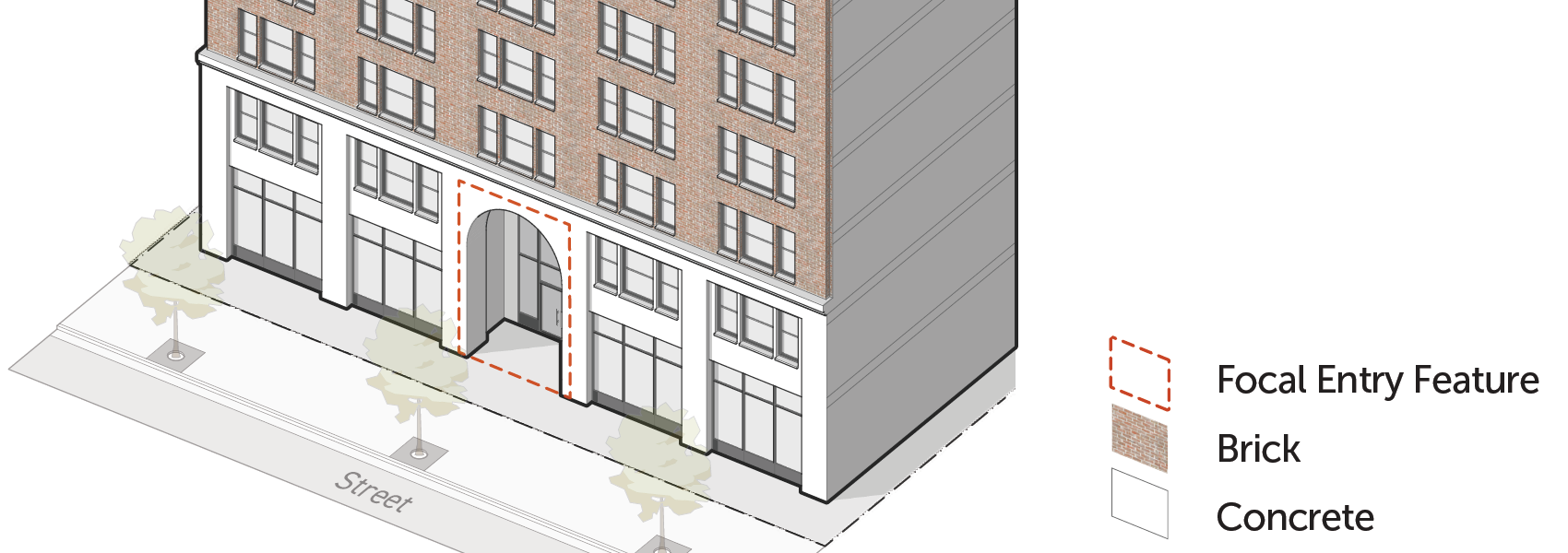
Character Frontage Districts (Div. 3B.9.) include a wider variety of diagrams, but use the same approach to representation established by the lot diagrams and facade diagrams. In addition to the elements depicted in lot and frontage diagrams, Character Frontage Districts represent articulation techniques, focal entry features, and exterior materials.
Articulation Techniques
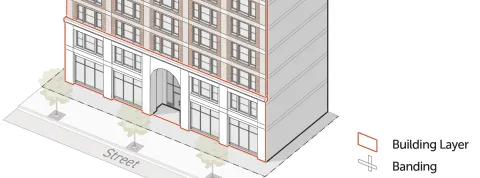
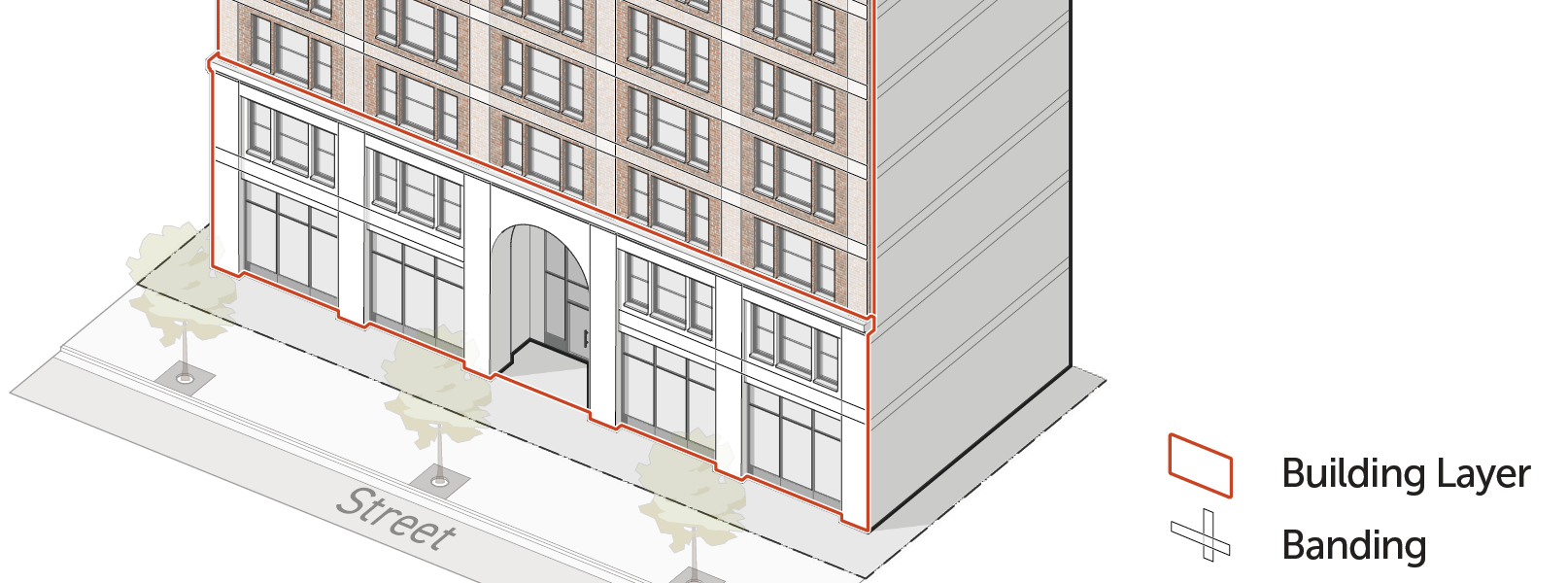
Articulation standards often include a variety of regulatory elements, for example, vertical band articulation and horizontal band articulation, building layers, and articulating elements. While articulating elements are not depicted in Character Frontage District diagrams, building layers are represented with a red outline and banding is represented using a black outline around a translucent white shape.
Focal Entry Features and Exterior Materials
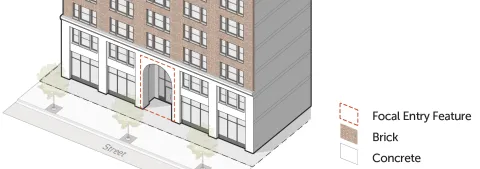
Focal entry features are represented by a dashed red outline surrounding the area on a facade that meets the focal entry feature requirements in the applied Frontage District (Part 3B.).
Primary and secondary exterior materials are represented using a variety of colors and textures to represent one or more of the exterior materials allowed by the applied Frontage District (Part 3B.).
Sec. 3A.1.4. Frontage District Naming Convention
Frontage District names have two components: frontage category and variation number.
Frontage Category
The first component of each Frontage District, frontage categories group all districts with similar characteristics, and are organized as follows:
Drive
Multi-Unit
General
Shopfront
Market
Large Format
Warehouse
Dual
Character
Variation Number
The second component of each Frontage District, a variation number represents the order that the Frontage District falls within this Article (Frontage).
Div. 3A.2. General Rules
Sec. 3A.2.1. Frontage
This Article (Frontage) regulates the portions of a lot and exterior building facades that impact the public realm. Frontage Districts (Part 3B.) help ensure that projects respond to the public realm in a contextually appropriate manner. Frontage Districts range from minimal standards (for example Warehouse Frontages) to a robust set of standards (for example Shopfront Frontages) which require projects to support a high-quality public realm that is active, comfortable, safe, and visually interesting, with strong connections between the public realm and uses inside buildings.
Sec. 3A.2.2. Frontage Applicability
General
All project applications filed after the effective date of this Zoning Code (Chapter 1A) must comply with the Frontage District standards and rules in this Article (Frontage), as further specified in the applicability statement of each Section in Part 3C. (General Frontage Rules) and Part 3D. (Character Frontage Rules). For vested rights, see Sec. 1.4.5. (Vested Rights), and for continuance of existing development, see Sec. 1.4.6. (Continuance of Existing Development).
Applicable Components of Lots, Buildings, & Structures
General
Frontage standards apply only to the applicable facades, portions of a lot, and building depth, as specified in Paragraph 3. (Frontage Applicable Facades) below. Specific Frontage District standards or rules may further limit which components of buildings and lots are required to comply with the standard within Part 3C. (General Frontage Rules) and Part 3D. (Character Frontage Rules).
Frontage Applicable Portions of a Lot
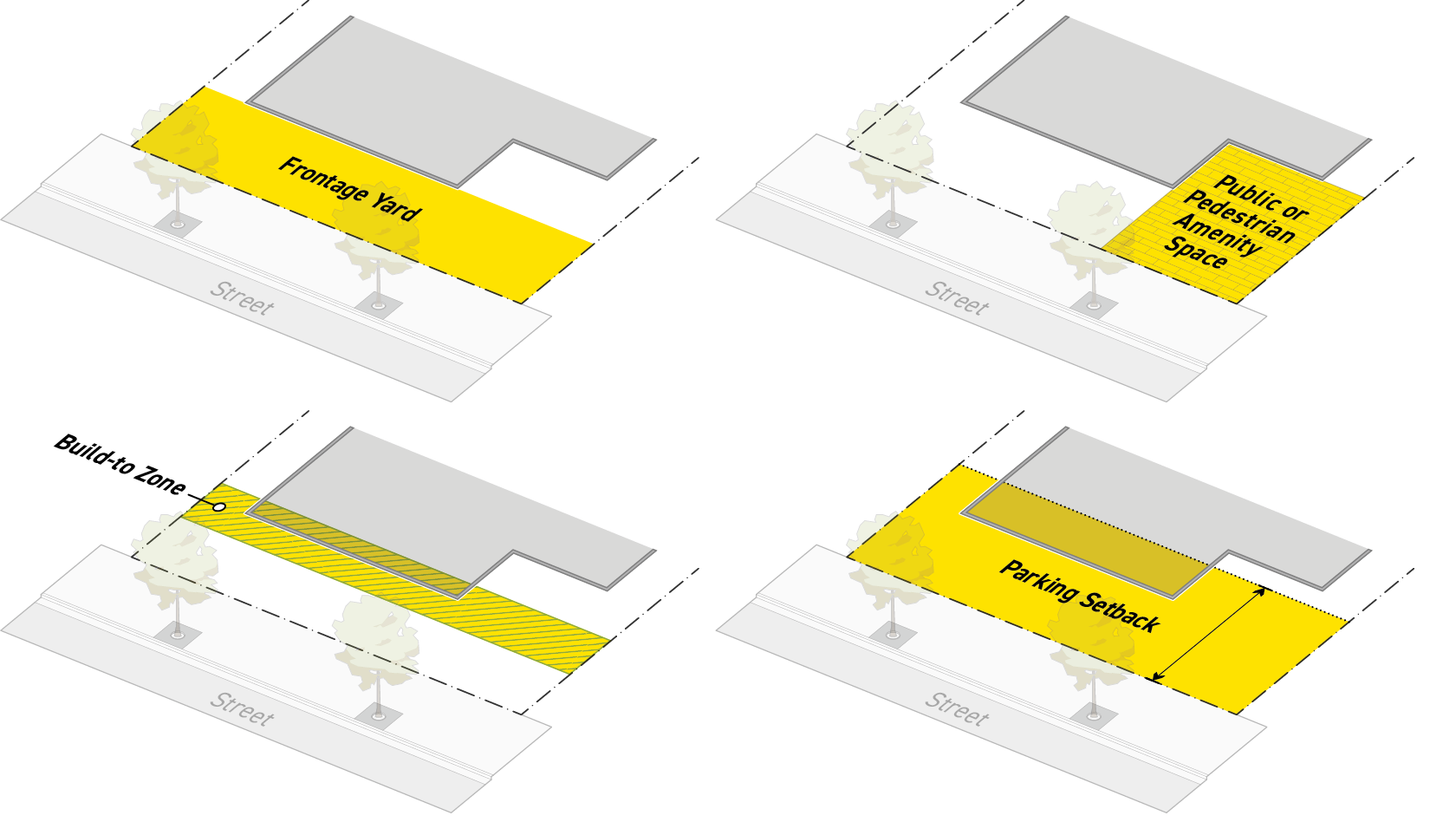
Frontage District standards apply to the following portions of a lot:
Frontage Applicable Facades
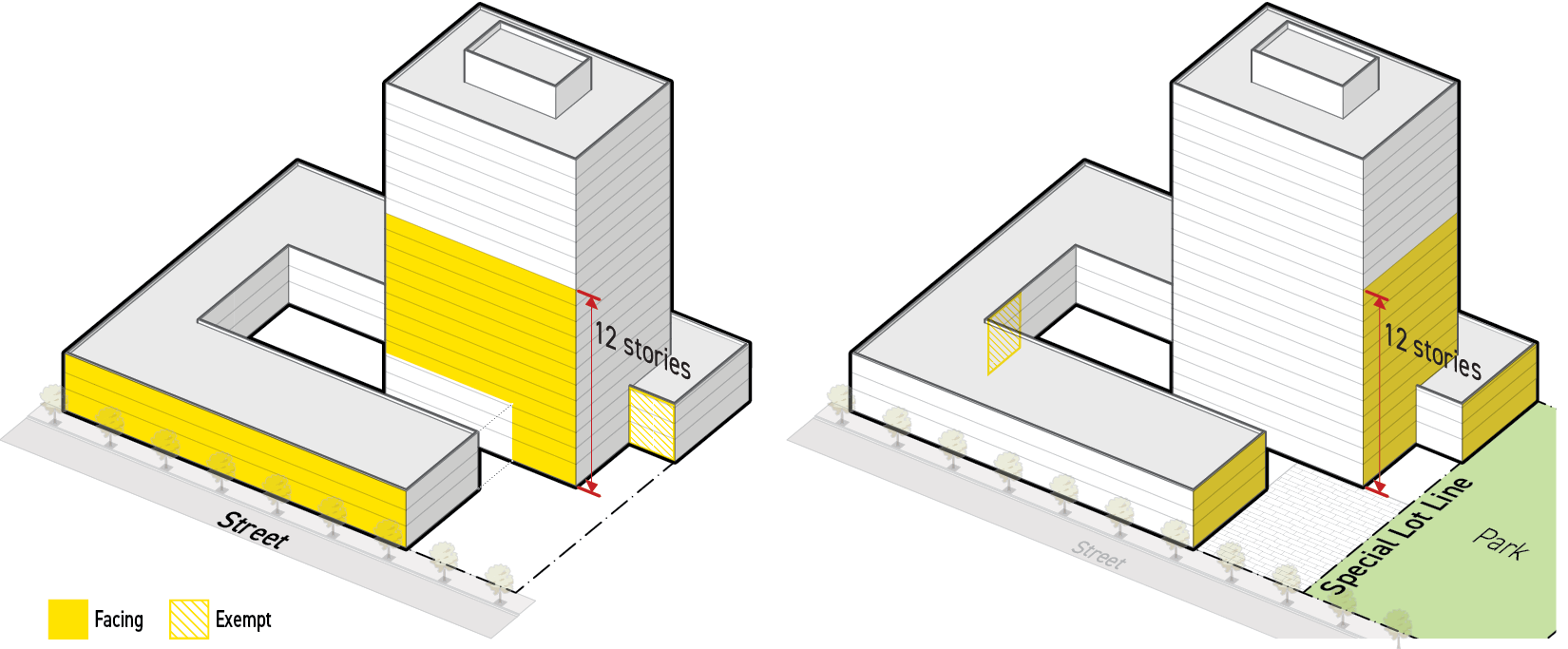
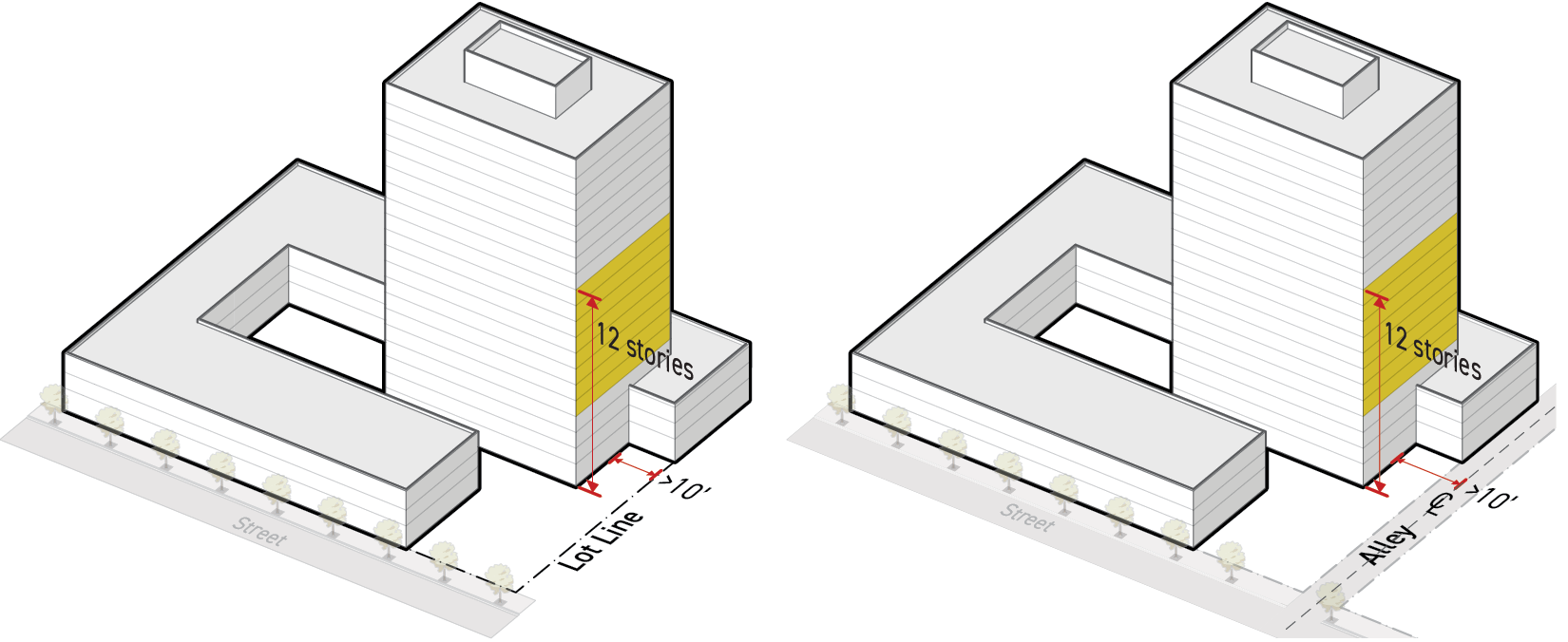
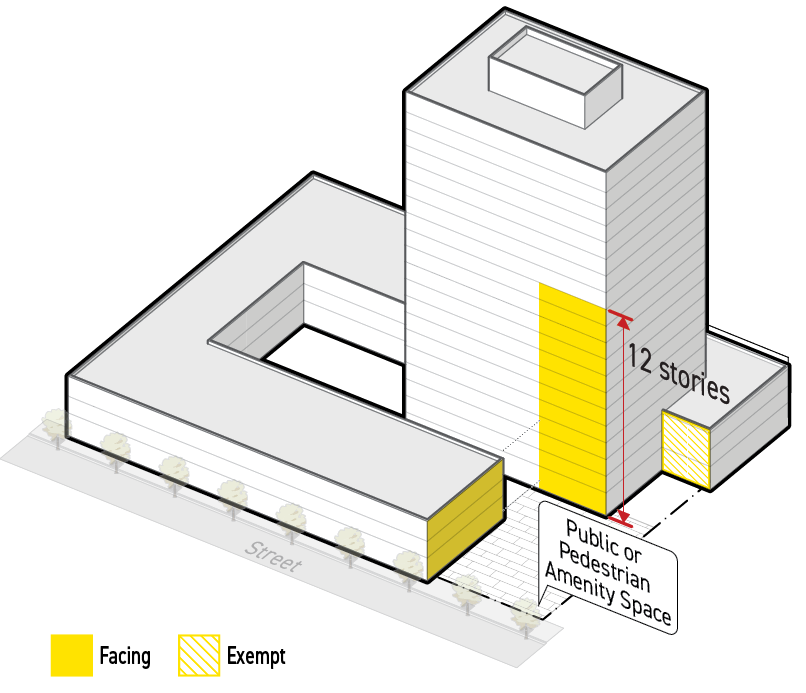
Frontage standards apply to the following facades up to the top of the 12th story, unless otherwise specified by the applied Frontage District (Part 3B.):
Frontage Lot Line-Facing Facades
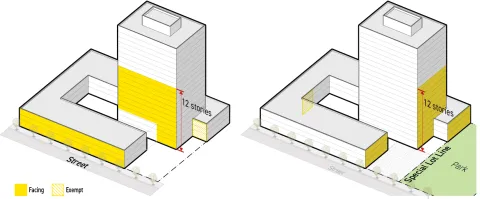
Facades facing a frontage lot line, including street-facing facades, special lot line-facing facades, and when a Dual Frontage District (Div. 3B.8.) is applied.
These facades shall meet the standards specified by the applied Frontage District (Part 3B.) along the frontage lot line that the facade faces (primary street lot line, side street lot line or special lot line).
Lot Line-Facing Facades (Non-Frontage Lot Line)
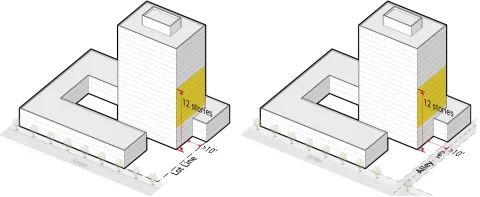
Lot line-facing facades that do not face a frontage lot line and are:
Located vertically above the top of the fourth story; and
Located 10 feet or more from a common lot line or centerline of an alley, measured horizontally.
Lot line-facing facades (non-frontage lot line) facades shall meet the standards specified by the applied Frontage District (Part 3B.) for the side street lot line.
Pedestrian Amenity Space and Public Amenity Space-Facing Facades
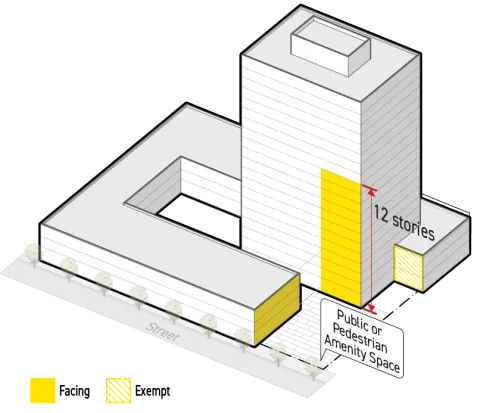
Facades that face a pedestrian amenity space or public amenity space, see Sec. 14.2.6.C. (Pedestrian Amenity & Public Amenity-Facing Facade).
These facades shall meet the standards specified by the applied Frontage District (Part 3B.) for the frontage lot line that the pedestrian amenity space or public amenity space abuts. Where the pedestrian amenity space or public amenity space abuts multiple frontage lot lines, the standards specified for the frontage lot line that abuts the pedestrian amenity space or public amenity space for the greatest length applies.
Frontage Applicable Building Depth
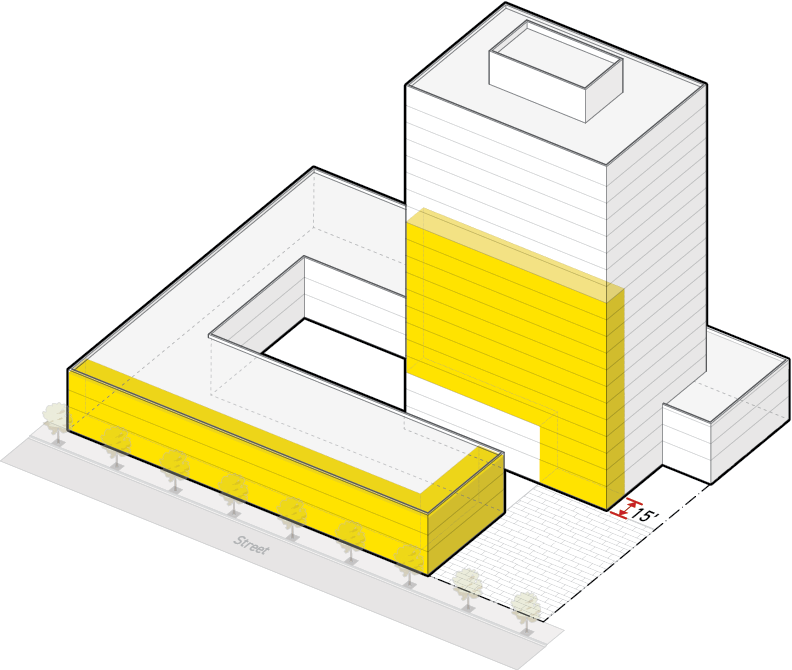
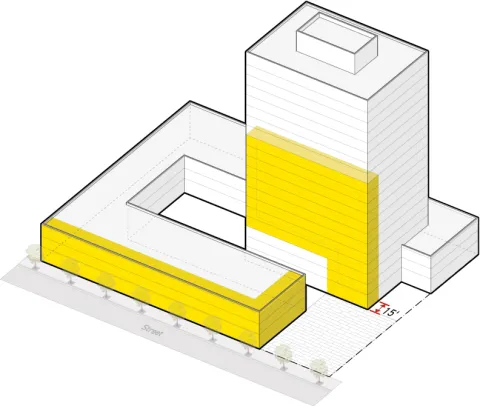
Frontage District standards apply to portions of a building interior within 15 feet of a frontage lot line-facing facade pursuant to Sec. 3A.2.2.B.3.a. (Frontage Lot Line-Facing Facades) or frontage applicable facades facing a pedestrian amenity space or public amenity space pursuant to Sec. 3A.2.2.B.3.c. (Pedestrian Amenity Space and Public Amenity Space-Facing Facades).
Nonconformities
Article 12. (Nonconformities) may provide relief from the requirements of this Article (Frontage) for existing lots, site improvements, buildings and structures, and uses that conformed to the zoning regulations, at the time they were established, but do not otherwise conform to current district standards or use permissions. Unless otherwise specified by Div. 12.3. (Frontage Exceptions), project activities must conform with applicable frontage standards.